




个人简介
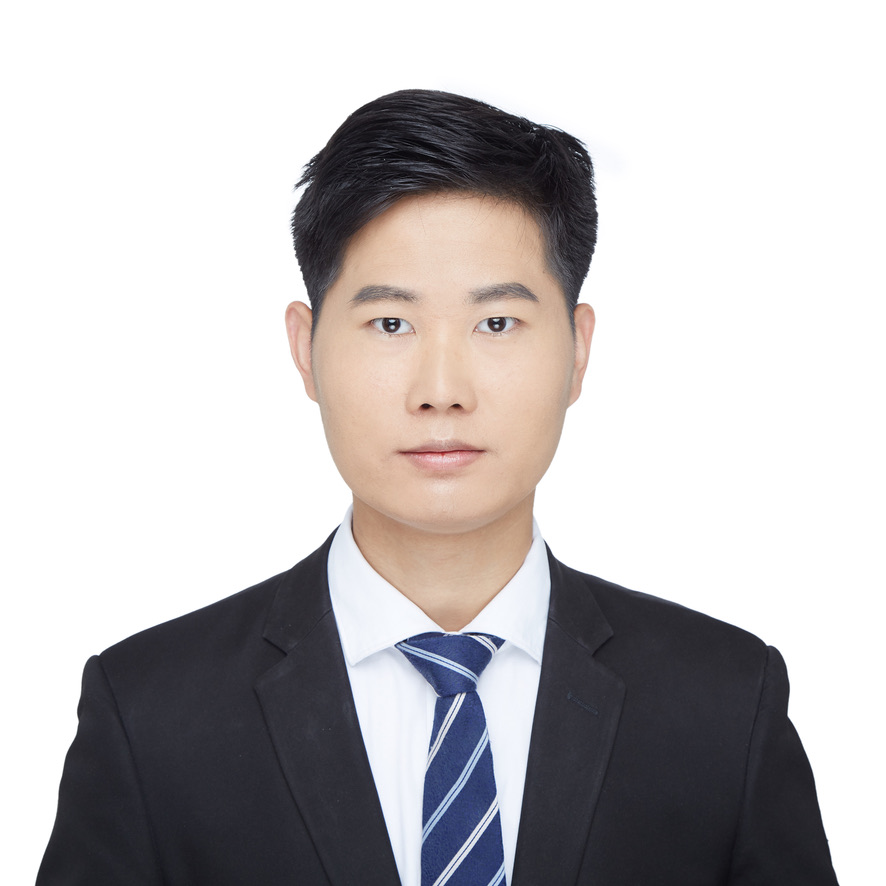
胡丕丕于2014年在清华大学取得学士学位,2020年获得清华数学博士学位,2020年到2022年博士后期间在清华&BIMSA从事人工智能和数学交叉研究,2022年加入微软研究院担任高级研究员从事科学大模型工作,2025年加入BIMSA担任副教授职位。胡丕丕的研究兴趣主要是基础大模型的数学方法和应用,包括自回归扩散和离散扩散模型,科学大模型。
团队:
偏微分方程理论与计算
研究兴趣
- 基础大模型中的前沿技术研究,包括连续和离散扩散模型以及自回归模型。
- 科学领域中的基础大模型。
- 基于微分方程的机器学习:求解算子、正反问题,以及带有微分方程结构的数据驱动机器学习建模。
教育经历
- 2014 - 2020 | 清华大学 | 数学 | 博士
- 2010 - 2014 | 清华大学 | 工程物理 | 学士
工作经历
- 2025 - -- | BIMSA | Associate Professor | 大模型算法与应用
- 2022 - 2025 | 微软研究院科学智能中心 | 高级研究员 | 科学大模型
- 2020 - 2022 | BIMSA & YMSC | 博士后 | 深度学习与微分方程
出版物
- [1] Fukang Wen, Yuchong Tang, Jingyuan Li, Beichen Wang, Yixuan Jiang, Xiaoyi Jiang, Yaxuan Liu, Shunyu Wang, Zuoqiang Shi, Yi Zhu, Yanan Zhu, Pipi Hu, OLEDLM: A Unified Language Model for OLED Molecular Design (2026)
- [2] J Li, X Jiang, Y Jiang, W Liu, Y Zhu, Z Shi, P Hu, Mean-to-Score Discrete Diffusion: Posterior-Mean Denoisers for Score Entropy (2026)
- [3] X Jiang, J Li, Y Jiang, W Liu, Y Zhu, Z Shi, P Hu, UNIFUSION: Adapting Autoregressive Language Models into Discrete Diffusion under a Unified Reverse-Rate Objective (2026)
- [4] Z Zeng, Y Jiang, P Hu, Z Shi, Constant-Target Energy Matching: A Unified Framework for Continuous and Discrete Density Estimation, arXiv, 2605.09085 (2026)
- [5] J Li, X Jiang, F Wen, W Liu, R Luo, Y Zhu, Z Shi, P Hu, Neural Continuous-Time Markov Chain: Discrete Diffusion via Decoupled Jump Timing and Direction, accepted by Neural Information Processing Systems 2026, 2604.15694 (2026)
- [6] P Hu, Drifting to Boltzmann: Million-Fold Acceleration in Boltzmann Sampling with Force-Guided Drifting, arXiv, 2603.05527 (2026)
- [7] Z Zeng, C Bao, P Hu, Y Zhu, Z Shi, Reconstruction of Dynamical Systems Without Time Label, Communications in Computational Physics, 39(3), 941-968 (2026)
- [8] Yan Jiang, Zhijun Zeng, Wuyue Yang, Liu Hong, Pipi Hu, Yi Zhu, STWCR: Weak collocation regression for revealing hidden stochastic dynamics from single trajectory data, Applied Mathematics and Computation, 521, 129958 (2026)
- [9] J Zhu, Y Shi, R Bi, P Jin, C Liu, Z Zhang, H Huang, Z Guo, P Hu, F Ju, ..., FlexRibbon: Joint Sequence and Structure Pretraining for Protein Modeling, International Conference on Learning Representations 2026 (2026)
- [10] L Guo, Z Wang, C Liu, J Li, P Hu, Y Zhu, Potential Score Matching: Debiasing Molecular Structure Sampling with Potential Energy Guidance, arXiv (2025)
- [11] G Zhang, Y Li, R Luo, P Hu, Y Yang, Z Zhao, L Li, G Liu, Z Wang, R Bi, ..., UniGenX: a unified generative foundation model that couples sequence, structure and function to accelerate scientific design across proteins, molecules and materials, arXiv, 2503.06687 (2025)
- [12] Z Chen, Z Zeng, P Hu, Y Zhu, Weak Collocation Networks: a deep learning approach to reconstruct stochastic dynamics from aggregate data, Communications in Nonlinear Science and Numerical Simulation, 109360 (2025)
- [13] M Ma, G Liu, C Cao, P Deng, T Dao, A Gu, P Jin, Z Yang, Y Xia, R Luo, ..., HybriDNA: A Hybrid Transformer-Mamba2 Long-Range DNA Language Model, arXiv (2025)
- [14] G Zhang, Y Li, R Luo, P Hu, Z Zhao, L Li, G Liu, Z Wang, R Bi, K Gao, ..., Unigenx: Unified generation of sequence and structure with autoregressive diffusion, arXiv (2025)
- [15] Liwei Lu, Zhijun Zeng, Yan Jiang, Yi Zhu, and Pipi Hu, Weak Collocation Regression method: fast reveal hidden stochastic dynamics from high-dimensional aggregate data, Journal of Computational Physics, 502, 112799 (2024)
- [16] Liya Guo, Liwei Lu, Zhijun Zeng, Pipi Hu, and Yi Zhu, Weak Collocation Regression for Inferring Stochastic Dynamics with Lévy Noise, Communications in Computational Physics (2024)
- [17] P Hu, A note on the adjoint method for neural ordinary differential equation network, arXiv, 2402.15141 (2024)
- [18] L Guo, L Lu, Z Zeng, P Hu, Y Zhu, Weak Collocation Regression for Inferring Stochastic Dynamics with L\'{e} vy Noise, arXiv preprint arXiv:2403.08292 (2024)
- [19] W Cui, H Zhang, H Chu, P Hu, Y Li, On robustness of neural ODEs image classifiers, Information Sciences, 632, 576-593 (2023)
- [20] G Lin, F Chen, P Hu, X Chen, J Chen, J Wang, Z Shi, Bi-greennet: learning green’s functions by boundary integral network, Communications in Mathematics and Statistics, 11(1), 103-129 (2023)
- [21] MR AI4Science, MA Quantum, The impact of large language models on scientific discovery: a preliminary study using gpt-4, arXiv (2023)
- [22] Zhijun Zeng, Pipi Hu, Chenglong Bao, Yi Zhu, Zuoqiang Shi, Reconstruction of dynamical systems from data without time labels, arXiv preprint arXiv:2312.04038 (2023)
- [23] Guochang Lin, Pipi Hu, Fukai Chen, Xiang Chen, Junqing Chen, Jun Wang, Zuoqiang Shi, BINet: Learning to Solve Partial Differential Equations with Boundary Integral Networks, CSIAM Transactions on Applied Mathematics (2023)
- [24] P. Hu, P. Xie, Yi Zhu, Traveling edge states in massive Dirac equations along slowly varying edges, IMA Journal of Applied Mathematics, 88(3), 455-471 (2023)
- [25] Pipi Hu, Wuyue Yang, Yi Zhu, and Liu Hong, Revealing hidden dynamics from time-series data by ODENet, Journal of Computational Physics, 461, 111203 (2022)
- [26] Zhengwei Liu, Obituary: Vaughan Jones, Notices of the International Consortium of Chinese Mathematicians, 9(1), 69-73 (2021)
- [27] Pipi Hu, Ablowitz, Mark J.,Justin T.Cole,Pipi Hu,and Peter Rosenthal, Peierls-Nabarro barrier effect in nonlinear Floquet topological insulators, Phys. Rev. E, 103(4), -, 2021 (2021)
- [28] P Hu, L Hong, Y Zhu, Linear and nonlinear electromagnetic waves in modulated honeycomb media, Studies in Applied Mathematics , 144(1), 18-45 (2020)
- [29] J Zhu, Y Shi, R Bi, P Jin, C Liu, Z Zhang, H Huang, Z Guo, P Hu, F Ju, ..., FlexProtein: Joint Sequence and Structure Pretraining for Protein Modeling, The Fourteenth International Conference on Learning Representations
- [30] G Lin, F Chen, P Hu, X Chen, J Chen, J Wang, Z Shi, A neural network framework for learning Green's function
更新时间: 2026-11-29 19:38:40